eBooks
91 Books foundThe NUQEW Public Domain Literature Library
The catalogue at nuqew.com/ebooks offers 91 works of English-language public-domain literature, with a particular focus on diaries, letters, and life writing from the 16th through early 20th centuries. Each book has been sourced from Project Gutenberg and includes a bibliographic record, an editorial note, and a reading guide. The collection is designed for readers who want to explore primary sources—personal correspondence, speeches, travel narratives, and reflective essays—rather than polished fictional works.
Browsing and Search
Readers can browse the full list of titles at /ebooks, where each entry displays the title, author, keywords, and a short catalogue note. There is no search bar or filtering system; navigation relies on the four category pages and the alphabetical listing. Each book page includes the original bibliographic metadata from the Project Gutenberg source, including author names with birth and death dates, translator and editor credits, and the original publisher information.
Categories and Organisation
The collection is divided into four categories: Adventure Picaresque Fiction; Fantasy Juvenile Worlds; Science Fiction Utopias; and Historical Psychological Social Fiction. These categories are not strict literary classifications but practical groupings that help readers find related works. For example, the World Events category brings together political speeches, war correspondence, and essays on society, while the Life Stories category collects intimate diaries and personal letters.
Practical Reading Paths
Path 1: The Transatlantic Intellectual Exchange
Start with The Correspondence of Thomas Carlyle and Ralph Waldo Emerson, 1834-1872, Vol. I (id 243) to see two thinkers debate politics and literature across the Atlantic. Follow with The Letters of Horace Walpole, Earl of Orford — Volume 1 (227) for 18th-century English politics, then Familiar Letters of Henry David Thoreau (279) for American transcendentalism.
Path 2: Women’s Voices in Private and Public
Begin with The Love Letters of Mary Wollstonecraft to Gilbert Imlay (266), then Letters Written During a Short Residence in Sweden, Norway, and Denmark (224) for Wollstonecraft’s travel writing. Move to The Diary and Letters of Madame D'Arblay — Volume 2 (234) for Fanny Burney’s court observations, and finish with Letters of a Woman Homesteader (248) for frontier life.
Path 3: Political Rhetoric and Crisis
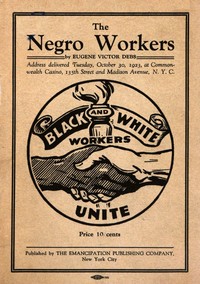
Read The Papers and Writings of Abraham Lincoln — Volume 1: 1832-1843 (218) for early speeches, then Selections from the Speeches and Writings of Edmund Burke (225) for 18th-century political philosophy. Continue with In our first year of war (256) for Woodrow Wilson’s World War I addresses, and The negro workers (300) for Eugene Debs’s socialist critique.
Source Attribution and Accuracy
Every book in the catalogue is drawn from Project Gutenberg’s public-domain repository. The bibliographic records—author, title, publisher, date, and keywords—are reproduced as supplied by that source. The editorial notes and reading guides are original to NUQEW and are based solely on the text of the works. No information beyond the supplied metadata is used. Readers should verify facts, dates, and attributions against the original sources.
Reading Guide Structure
Each book page includes a catalogue note that describes the content and highlights a distinctive feature—a rhetorical strategy, a shift in voice, or a recurring image. These notes are meant to orient the reader, not to summarise the entire work. They are prepared as supplementary catalogue material a single reading, not a scholarly consensus.
Bibliographic dates and catalogue measurements
The catalogue distinguishes the Project Gutenberg digital release from a work’s original or first publication. Project Gutenberg is identified as the digital source for the edition available here; its release year is therefore shown as Gutenberg Release Year, not as the work’s original publication year.
When an explicit first-publication or issue date can be supported directly by the title or issue information, it may be shown separately as First Publication Year. When that date cannot be confirmed, the catalogue displays Not confirmed rather than guessing a year.
Where the source text can be measured reliably, the catalogue may provide word count and estimated reading time. These measurements describe reading scope and are not quality rankings.
The current catalogue contains 4 active subject categories: Adventure Picaresque Fiction, Fantasy Juvenile Worlds, Science Fiction Utopias, and Historical Psychological Social Fiction. Categories are browsing aids and may overlap where a work reasonably fits more than one subject.