About 581 minutes
Familiar Letters The Writings of Henry David Thoreau, Volume 06 (of 20) — A Closer Reading
Adventure Picaresque Fiction
133,521 recorded words. 36 minutes difference from this book's estimate.
View Gutenberg source #43523
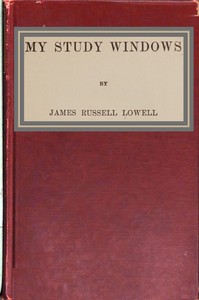
Before opening My study windows — Text and Context, the edition data offers a quick orientation: 141,750 words, 10 hr 17 min estimated reading time, and 18 detected text sections.
The text analysis averages about 26.2 words per sentence, while the detected sections provide another way to judge how the source is divided.
Project Gutenberg metadata also associates the work with “Lincoln, Abraham, 1809-1865,” connecting these edition facts with the source record’s subject description.
Explore this collection
These alternatives are selected using recorded categories and estimated reading time.
About 581 minutes
Adventure Picaresque Fiction
133,521 recorded words. 36 minutes difference from this book's estimate.
View Gutenberg source #43523About 515 minutes
Adventure Picaresque Fiction
118,300 recorded words. 102 minutes difference from this book's estimate.
View Gutenberg source #68604About 722 minutes
Adventure Picaresque Fiction
165,970 recorded words. 105 minutes difference from this book's estimate.
View Gutenberg source #30990Search stored excerpts and compare books → Choose by your preferences →
Choices use stored catalog measurements. Estimates vary with reading speed. A shared category is a catalog label, not a claim that two books have the same argument or literary quality.
Search reads excerpt text stored with this catalog and links to its associated Gutenberg record. The connection is stored in the site database; this tool does not recheck that every excerpt is word-for-word identical to that external record. Excerpt search does not cover every chapter and does not verify historical publication dates.
Catalog snapshot checked: 2026-09-25. Coverage: 91 public books, 91 available source excerpts.
Read the complete public-domain text at its original source.
Read on Project GutenbergLowell begins My Study Windows by recalling the pleasure of reading White's Natural History of Selborne, a book that, as he puts it, “takes you out of doors.” The opening essay, “My Garden Acquaintance,” establishes a tone of genial, learned observation, blending personal anecdote with natural history. Lowell ambles through his garden much as White ambled through Selborne, noting birds and insects with a naturalist's eye and a literary man's wit.
The prefatory note reveals that these essays were written over fifteen years and that the title is meant to imply “both the books within and the world without.” The volume is dedicated to Professor F. J. Child, a fellow scholar and friend, signaling Lowell's intent to address a cultivated audience interested in literature, nature, and public life.
The table of contents shows a remarkable variety: alongside nature pieces like “My Garden Acquaintance” and “A Good Word for Winter” are essays on Carlyle, Lincoln, Thoreau, Swinburne, Chaucer, Emerson, and Pope. This juxtaposition of the personal and the critical, the natural and the literary, is central to the collection's character. Lowell moves from observing a bird to analyzing a poet without apparent strain, suggesting that for him the study window opens onto both the garden and the library.
The essays on public figures—Lincoln, Carlyle, Thoreau—are not mere biographies but reflective assessments. The Lincoln essay, for instance, appears alongside a piece on the poet James Gates Percival, indicating Lowell's interest in contrasting kinds of American character. The reader should expect each essay to be a window onto its subject, but also onto Lowell's own mind and era.
In the excerpt on tragedy, Lowell compares Spanish, French, and English drama, noting that the Spanish inclines toward the lyrical, the French toward the epical, and the English toward the historical. He argues that the highest literature is not “the fabric of scholarship” but born from “some genetic principle in the character of the people and the age.” This passage exemplifies his method: he moves from specific observations to broader principles, often using comparison to illuminate national character.
He praises Milton's Samson Agonistes as the most successful modern imitation of Greek tragedy, precisely because Milton chose a subject “familiar to the earliest associations of his hearers.” Lowell's own essays often seek such familiar ground, whether in the garden or in the lives of well-known figures. Readers will find him repeatedly testing abstract ideas against concrete examples.
Lowell's prose is conversational but learned. He refers to Walton, Cowper, and Goethe as naturally as he mentions the Honourable Daines Barrington. His tone is that of a man speaking to friends, not lecturing from a podium. The dedication to Child and the prefatory note's self-deprecating remark about “shutting them between two covers” reinforce this intimacy.
Yet the learning is real. The essay on Chaucer, which gave the volume its dedication, is described by Lowell as something Child “was good enough to like,” implying a scholarly audience. The reader should be prepared for allusions that assume a shared literary culture, but also for moments of plain delight, as when Lowell describes White's book as “genially garrulous.” The voice is that of a man who has read widely but remains a curious observer of the world outside his window.
The excerpts provided are too brief to reveal the full arc of any single essay. We see the opening of “My Garden Acquaintance” and a later passage on tragedy, but not the middle sections where Lowell develops his arguments. The Lincoln essay, for example, is listed but not excerpted, so we cannot know how Lowell treats that subject. Similarly, the essays on Thoreau and Emerson are present only as titles.
What is clear is that Lowell values specificity: he names birds, authors, and historical figures rather than speaking in abstractions. The reader should approach each essay as a self-contained piece, but also as part of a larger conversation about nature, literature, and American identity. The collection's structure—moving from the personal to the public—suggests that Lowell sees these realms as connected, each illuminating the other.
Lowell's My Study Windows rewards a reader who enjoys following a well-stocked mind as it moves from a bird's nest to a line of Chaucer, from the winter landscape to the character of Lincoln. The essays are best read slowly, perhaps one at a time, allowing each to open its own view. The title is apt: these are windows, not doors—each gives a framed perspective, but the view is always worth pausing over.
I’ve shelved Lowell’s essays beside my own garden thoughts, but there’s a quieter kinship I note between his patient walk among the winter beds and the plain-spoken warmth of the Indiana letters. Both seem to understand that honed observations, whether of Carlyle or a neighbor’s harvest, are best shared like a slow fire. That’s the particular grace of Epistles from Pap: Letters from the man known as 'The Will Rogers of Indiana' — Edition Insights.
Build a private reading journal entry for this title.