About 515 minutes
Europe and elsewhere — Reading Notes
Adventure Picaresque Fiction
118,300 recorded words. 39 minutes difference from this book's estimate.
View Gutenberg source #68604
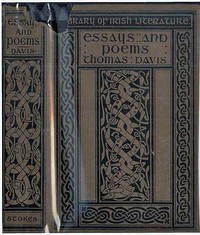
This digital edition of Thomas Davis, selections from his prose and poetry — Key Ideas to Explore is described by source-level measurements including 109,285 words, 7 hr 56 min estimated reading time, and 13 detected text sections.
The text analysis averages about 23.9 words per sentence, while the detected sections provide another way to judge how the source is divided.
Project Gutenberg metadata also associates the work with “Poetry,” connecting these edition facts with the source record’s subject description.
Explore this collection
These alternatives are selected using recorded categories and estimated reading time.
About 515 minutes
Adventure Picaresque Fiction
118,300 recorded words. 39 minutes difference from this book's estimate.
View Gutenberg source #68604About 403 minutes
Adventure Picaresque Fiction
92,501 recorded words. 73 minutes difference from this book's estimate.
View Gutenberg source #387About 390 minutes
Adventure Picaresque Fiction
89,551 recorded words. 86 minutes difference from this book's estimate.
View Gutenberg source #13660Search stored excerpts and compare books → Choose by your preferences →
Choices use stored catalog measurements. Estimates vary with reading speed. A shared category is a catalog label, not a claim that two books have the same argument or literary quality.
Search reads excerpt text stored with this catalog and links to its associated Gutenberg record. The connection is stored in the site database; this tool does not recheck that every excerpt is word-for-word identical to that external record. Excerpt search does not cover every chapter and does not verify historical publication dates.
Catalog snapshot checked: 2026-09-25. Coverage: 91 public books, 91 available source excerpts.
Read the complete public-domain text at its original source.
Read on Project GutenbergThis volume presents Thomas Davis (1814–1845) not as a poet of sentimental nationalism but as a polemicist who wielded historical argument and linguistic advocacy as weapons. The selection opens with his defense of the Irish Parliament of James II, a body he insists was maligned by later historians. In the excerpted essay on language, Davis calculates that five-sixths of Ireland is of Celtic blood, citing a 15th-century statute that compelled Irishmen to adopt English surnames. His prose is forensic, marshaling dates and acts of parliament, yet it pulses with rhetorical questions and exclamations. The poetry, represented here in part, is meant to stir—but the prose reveals the strategist behind the bard.
Davis’s opening essay is a lawyerly rehabilitation of the Irish Parliament that sat under James II. He does not narrate events; he argues a case, citing statutes and challenging what he calls “the much-maligned” assembly. The excerpt does not reveal his full evidence, but the tone is combative: he treats the parliament as a legitimate institution misrepresented by Whig historians. This is not impartial history but a brief for national dignity. Readers should note how Davis uses legal language—vindication, maligned—to frame his project. The essay assumes familiarity with 17th-century Irish politics; the modern reader may need to consult external sources to assess his claims.
In the essay on the Irish language, Davis draws a direct line between linguistic survival and political freedom. He compares Ireland’s situation to Scotland, Wales, and Hungary, where “the speech of the alien is not universal.” His method is statistical: he estimates the proportion of Celtic blood, then cites the 1465 statute (3 Edw. IV, c. 3) that forced Irishmen to take English surnames. He names the act’s provisions—apparel, beard-shaving, surname choices—with precision. The passage is both a cultural lament and a call to action, urging readers to rescue “the sweet old language.” Davis’s argument is emotional but anchored in specific legal history, making it a distinctive blend of antiquarianism and polemic.
The poems in this collection are not represented in the excerpts, but the introduction by T.W. Rolleston frames them as the culmination of Davis’s work. Rolleston states that the selection aims to include “everything of high and permanent value” Davis wrote in verse. Given Davis’s role in the Young Ireland movement, his poetry was intended to be sung and recited—a vehicle for nationalist sentiment. The prose essays, however, reveal the intellectual scaffolding: the historical arguments and linguistic theories that underpin the verse. Readers approaching the poems should consider them as part of a broader project, where each stanza answers a political question posed in the essays.
This edition, part of the Library of Irish Literature series, presents Davis as a figure who believed that cultural revival and political independence were inseparable. The prose essays demand attention for their forensic detail; the poems, for their rhythmic conviction. Readers interested in 19th-century nationalism will find here a case study in how one writer tried to forge a nation through words—by reclaiming its history, its language, and its songs.
I’ve often thought Davis’s fire finds a quieter echo in Cowper’s letters—one man pleading for a nation’s voice, the other soothing a private ache. Both knew the loneliness of words meant to heal. The Works of William Cowper His life, letters, and poems, now first completed by the introduction of Cowper's private correspondence — A Closer Reading feels like a hand resting on the same shelf, patient and warm.
A brief reflection can help important ideas stay with you longer.